The shift towards renewable energy sources across Europe has created a significant employment landscape, with 2.04 million jobs reported in the sector for 2024. Of these, nearly 1.8 million were situated within the European Union, positioning the bloc as a major global contributor to green employment. This growth occurs even as former President Donald Trump has publicly dismissed clean energy initiatives as a “green new scam,” highlighting a divergence in perspectives on the industry’s economic impact.
A joint study by the International Labour Organization (ILO) and the International Renewable Energy Agency (IRENA) for 2025 indicated that the EU’s 27 member states collectively accounted for 10.8% of the world’s renewable energy employment. This figure placed the EU as the third-largest entity globally in this regard, trailing only China, which dominated with 43.9% of global renewable energy jobs, and Asia (excluding China and India) at 14.9%. The increasing demand for a renewable energy workforce aligns with a broader trend in energy production. For the first time in 2025, wind and solar power generation in the EU surpassed that of fossil fuels, albeit by a narrow 1% margin, according to a report from the energy think tank Ember, signifying a critical step in the transition to cleaner power.
Within the EU, the wind power sector alone employed an estimated 279,100 individuals in 2024. Germany emerged as the leading employer within the bloc, responsible for approximately 110,000 of these positions, followed by Spain and Denmark. This concentration of jobs reflects Europe’s continued prominence in the global wind energy market, maintaining its status as both the world’s second-largest installer and second-largest manufacturer of wind equipment. However, the offshore wind segment, despite its potential, faces persistent difficulties. These include escalating costs, project cancellations, hurdles in grid integration, and disruptions within its supply chain, posing challenges to further expansion and job creation in this specific area.
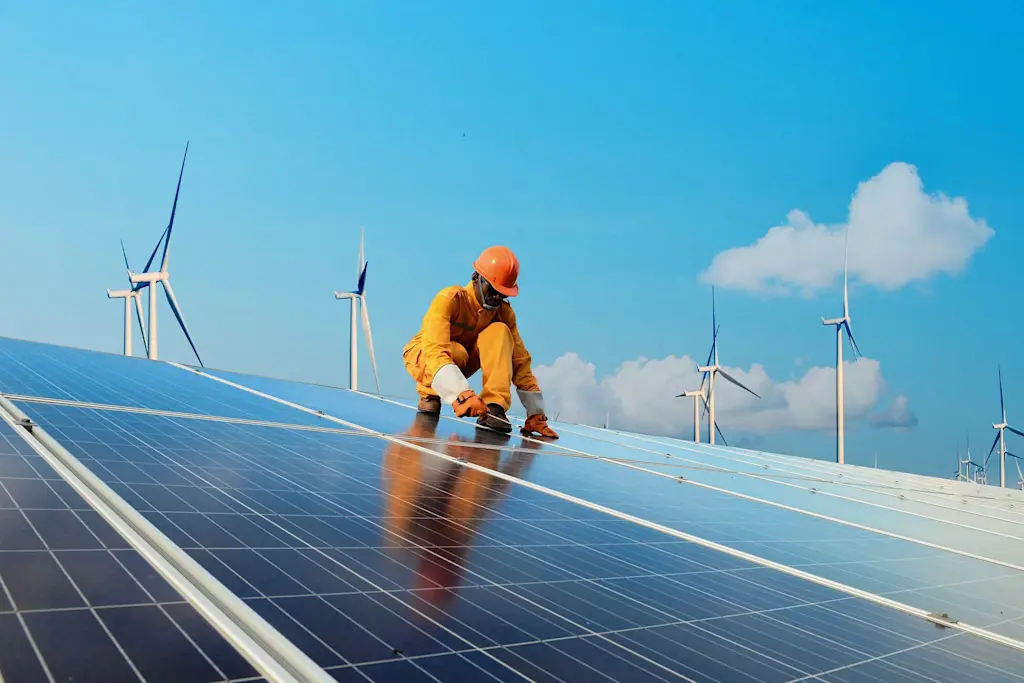
The solar energy sector also demonstrated substantial employment figures, reaching a record 865,000 people in 2024. While this represented a slowdown to 5% year-on-year growth compared to previous periods, it still outpaced the broader EU labor market’s growth of 0.8%, as detailed in a 2025 SolarPower Europe report. Despite this, projections for 2025 estimate a contraction in the EU solar workforce by 5%, potentially reducing the number of jobs from 865,000 to around 825,000. This anticipated decline is attributed to policy frameworks that have not sufficiently attracted investment in solar and met consumer demand in the post-energy crisis landscape. Additionally, global production overcapacity has created intense competitive pressure for European manufacturers.
Germany again led in solar employment in 2024, followed by Spain, Italy, and Poland. Yet, Germany, alongside the Netherlands and Poland, also experienced some of the most significant employment declines within the sector during that year. Beyond the numbers, the renewable energy industry continues to grapple with issues of gender representation. In 2024, women held 32% of full-time positions in the sector, a figure higher than in oil and gas (23%) but still below the global workforce average of 43%. Furthermore, these roles predominantly remain in administrative functions and technical positions outside of science, technology, engineering, and mathematics, with only 19% of senior management roles occupied by women, indicating a persistent disparity in leadership and STEM-related fields.