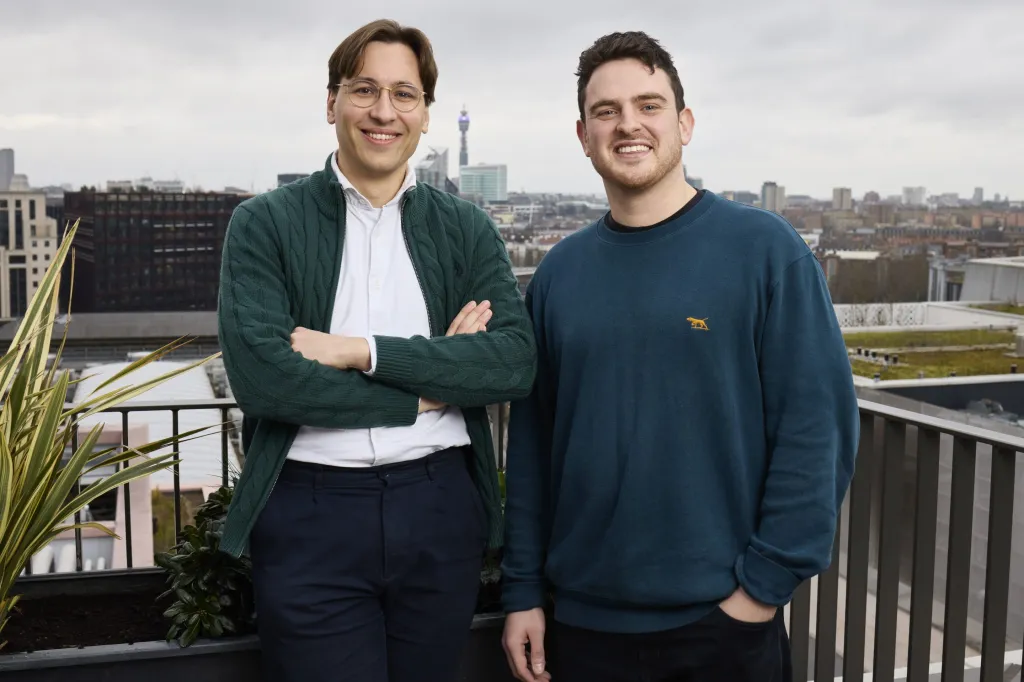

The monolithic control exerted by Nvidia over the burgeoning AI data center landscape may soon face a significant challenge. Callosum, a London-based startup founded by two neuroscientists trained at Cambridge, recently announced it has secured $10.25 million in funding. This capital infusion is earmarked for the development of software designed to orchestrate diverse AI workloads across a variety of chip architectures, a direct counterpoint to the industry’s prevailing reliance on large clusters of identical Nvidia GPUs. The company’s ambition extends beyond mere software, aiming to fundamentally rethink data center design itself.
This strategic investment arrives as the artificial intelligence sector undergoes a notable shift. For years, the emphasis largely remained on training massive foundational models, often utilizing vast arrays of Nvidia’s specialized graphics processing units. However, the industry’s focus is now pivoting towards inference — the practical application of these trained models to generate outputs. Industry analysts, such as Deloitte, project that inference workloads will constitute approximately two-thirds of all AI compute by 2026, a substantial increase from just one-third in 2023. This evolution is anticipated to fuel a market for inference-optimized chips exceeding $50 billion this year, creating fertile ground for new entrants and novel approaches.
Callosum’s cofounders, Danyal Akarca and Jascha Achterberg, who initially connected during their PhD studies at Cambridge around 2019, are at the forefront of this shift. Their software solution enables the distribution of AI tasks across a heterogeneous mix of chips, encompassing not only Nvidia GPUs but also AMD processors, Amazon Web Services’ custom Trainium and Inferentia silicon, and even newer designs from emerging players like Cerebras and SambaNova. This approach, they contend, allows for the extraction of optimal performance advantages from each specialized chip. Their underlying thesis draws inspiration from neuroscience, positing that true intelligence in the human brain arises from the coordinated effort of numerous specialized cell types and circuits, rather than the replication of a single neuron type. They argue that AI computing should mirror this biological principle.
The funding round itself was spearheaded by Plural, a European early-stage venture fund co-founded by Taavet Hinrikus of Wise and Ian Hogarth, who previously chaired the U.K.’s AI Safety Institute. Notable angel investors, including Charlie Songhurst, Stan Boland of FiveAI, and John Lazar of the Royal Academy of Engineering, also participated. Furthermore, the U.K. government’s Advanced Research and Invention Agency (ARIA) is providing grant funding to Callosum. This government support underscores a broader national objective to cultivate sovereign cloud infrastructure for AI, aiming for independence from, or at least reduced reliance on, U.S. technology providers. ARIA’s grant specifically targets accelerating research and development into integrating novel chip technologies into Callosum’s platform, though it does not constitute an investment in the funding round itself.
Callosum’s platform is designed for seamless integration across multiple cloud providers, including AWS, Google Cloud, and Microsoft Azure, without requiring customers to re-architect their existing cloud setups. The cofounders assert that their system can deliver significant performance enhancements for complex, real-world tasks involving multiple decision points, such as automating computer usage or streamlining enterprise workflows. For these types of applications, Callosum claims its system can achieve twice the accuracy, a sevenfold increase in speed, and a fourfold reduction in cost compared to running similar workloads on uniform hardware. The rationale is that complex problems are inherently heterogeneous, requiring different types of models and hardware for various subtasks.
The company is targeting two distinct customer segments: enterprises building multi-agent AI systems that demand superior performance for intricate workflows, and emerging chip manufacturers seeking to effectively demonstrate the capabilities of their hardware at scale. Callosum is also actively collaborating with companies developing advanced interconnect technologies, including photonics-based networking, to address data transfer bottlenecks within data centers. These efforts are particularly critical as diverse chip types increasingly need to communicate efficiently. The long-term vision articulated by Akarca and Achterberg extends beyond software, aiming to fundamentally redefine data center infrastructure. They maintain that chip diversity, often perceived as a challenge, is in fact an advantage to be leveraged.