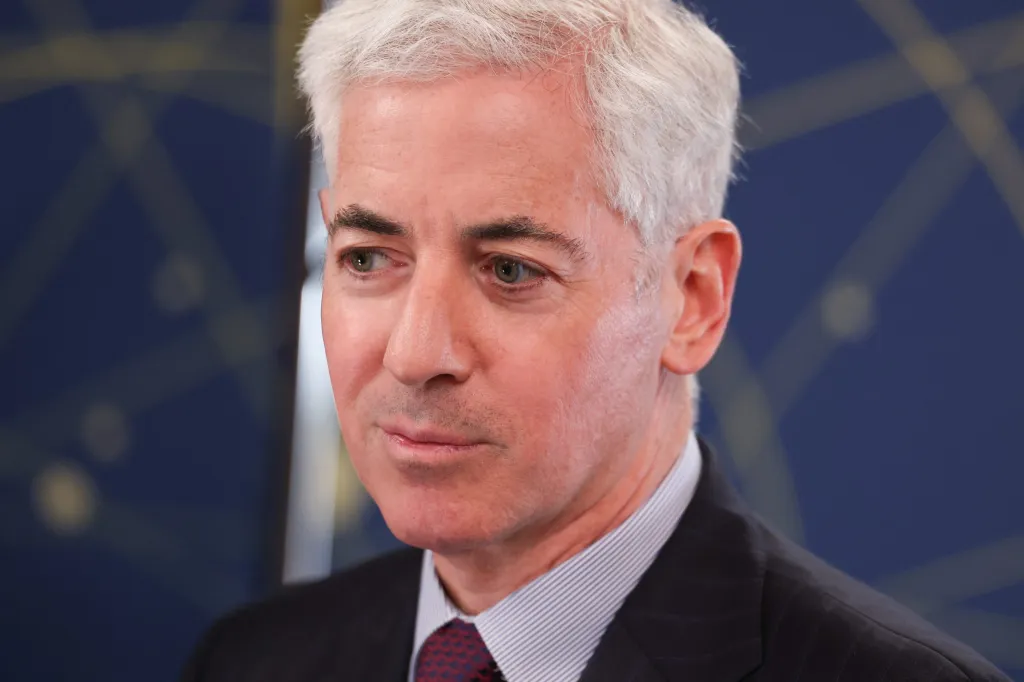

When Microsoft shares dipped after a second-quarter earnings report earlier this year, reflecting a slight slowdown in cloud growth and increased capital expenditure, billionaire investor Bill Ackman saw an opportunity. His hedge fund, Pershing Square Capital Management, began accumulating a new position in the software behemoth in February, a move that went largely unnoticed until Ackman himself disclosed it in a lengthy post on X. This latest investment continues a pattern for Ackman of stepping into major technology companies during periods of market skepticism, particularly those tied to artificial intelligence developments. He previously acquired Alphabet when its stock fell after the release of ChatGPT in late 2022, Amazon following its “Liberation Day,” and Meta Platforms more recently amid investor reaction to its substantial capital expenditure guidance.
Ackman’s decision to invest in Microsoft at a valuation of approximately 21 times forward earnings, a multiple he noted was broadly in line with the broader market and below Microsoft’s historical trading average, underscores his conviction. The technology giant’s stock has faced headwinds, declining over 15% year-to-date, as the market grapples with questions surrounding the profitability of its Azure cloud business against the backdrop of significant AI investments. Concerns were further amplified by a restructuring of its partnership with OpenAI, which stripped Microsoft of certain exclusive distribution rights. However, Ackman interprets this restructuring not as a setback, but as a strategic pivot towards a multi-model architecture, which he believes will better serve the diverse needs of enterprise clients.
Beyond the immediate AI narrative, Ackman also champions the enduring strength of Microsoft’s 365 productivity suite. He describes this suite as “deeply embedded” within enterprises, making it “nearly impossible to replicate” and arguing that its inherent stickiness is often underestimated by investors. This perspective highlights a longer-term view of Microsoft’s fundamental business segments, suggesting that its widespread adoption in everyday business operations provides a stable and defensible revenue stream, regardless of short-term market fluctuations related to emerging technologies.
The investor also addressed apprehensions surrounding Microsoft’s ambitious $190 billion capital expenditure budget for 2026. Rather than viewing this as a potential drag on margins, Ackman frames it as a growth investment, akin to a “J curve” where initial significant outlays are expected to yield substantial returns over time. This interpretation suggests a belief in Microsoft’s capacity to effectively deploy capital for future expansion, particularly in high-growth areas like cloud infrastructure and AI research. Furthermore, Ackman pointed out that Microsoft’s current market capitalization does not yet fully account for its substantial 27% economic interest in OpenAI, an investment he estimates to be worth roughly $200 billion based on the startup’s most recent funding round valuation. This indicates a potential undervaluation, in his view, reflecting a significant asset not fully priced into the stock.
Ackman has characterized his Microsoft holding as a “core” position, though the precise size of the stake remains undisclosed, awaiting the firm’s quarterly 13F filing. His public disclosure, preceding the mandatory regulatory filing, aligns with his characteristic approach to communicating significant investment decisions. This move into Microsoft during a period of what he perceives as AI-related skepticism aligns with his broader investment philosophy of identifying strong companies experiencing temporary market headwinds. It reflects a calculated bet on Microsoft’s long-term growth trajectory, driven by its established enterprise presence, strategic AI investments, and undervalued assets, despite prevailing market anxieties.