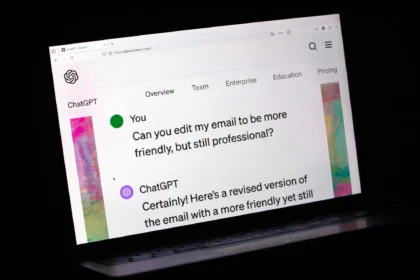



The Department of War has significantly expanded its artificial intelligence capabilities, rolling out military-specific versions of OpenAI’s ChatGPT and Elon Musk’s Grok to its GenAI.mil platform. This move grants access to roughly 3 million military and civilian personnel, aiming to integrate advanced AI tools into daily operations and streamline a vast array of unclassified tasks. The initiative underscores a broader push from War Secretary Pete Hegseth to embed an “AI-first” mentality across the Pentagon, aligning with national directives to maintain military preeminence through technological adoption.
Launched in December with an initial offering of Google’s Gemini, the GenAI.mil platform now incorporates ChatGPT Mil and Grok for Government, following defense contracts awarded to OpenAI and SpaceXAI, the developer behind Grok, each worth up to $200 million. These specialized AI models are designed to operate within a secure environment, handling Controlled Unclassified Information (CUI) at Impact Level 5 (IL5). This designation covers sensitive government data that is not classified, a critical distinction given the nature of military operations. OpenAI’s head of government, Joe Larson, noted that ChatGPT on GenAI.mil would enhance efficiency in unclassified work, freeing up resources for core mission objectives. The Pentagon emphasized that ChatGPT Mil provides a familiar commercial experience adapted for military requirements, while Grok for Government promises advanced reasoning capabilities to accelerate mission execution across various operational contexts, from market research to supply-chain management.
Much of the Department of War’s daily workload involves extensive, document-heavy administrative tasks across human resources, logistics, and contracting. These are precisely the areas where large language models, with their capacity to process and synthesize vast amounts of information, could offer substantial improvements. The secure versions of ChatGPT and Grok are designed to keep all data within their designated environments, crucially, without using it to train their underlying models. This data isolation addresses a primary security concern for government agencies adopting commercial AI technologies, ensuring sensitive information remains protected.
The rapid deployment of GenAI.mil has not been without its initial challenges. Reports from DefenseScoop in December highlighted some confusion among service members during the platform’s initial rollout. A pop-up message on government computers, featuring a stylized GenAI.mil logo and the phrase “I want YOU to use AI,” led some, including a senior Army official, to initially suspect a cyberattack. These concerns were only assuaged after War Secretary Hegseth circulated memos and appeared in social media videos, declaring, “The future of American warfare is here, and it’s spelled AI,” and urging all personnel to immediately integrate AI into their workflows. His directive underscored the urgency and strategic importance placed on AI adoption within the military.
Notably absent from the latest additions to GenAI.mil is Anthropic’s Claude, despite the company also receiving a defense contract. A public rift emerged between Anthropic and the Department of War, stemming from Anthropic’s reported push for the Pentagon to agree not to use its technology for autonomous weapons or surveillance. Secretary Hegseth publicly criticized AI models that “won’t allow you to fight wars,” a comment later understood to be directed at Anthropic. This disagreement escalated to the point where President Donald Trump directed federal agencies to cease using Anthropic’s technology, and Hegseth designated the company a “supply-chain risk.” While a judge recently ruled the Department of War acted unlawfully in that designation, the episode illustrates the complex landscape of ethical and operational considerations as the military integrates cutting-edge AI.