

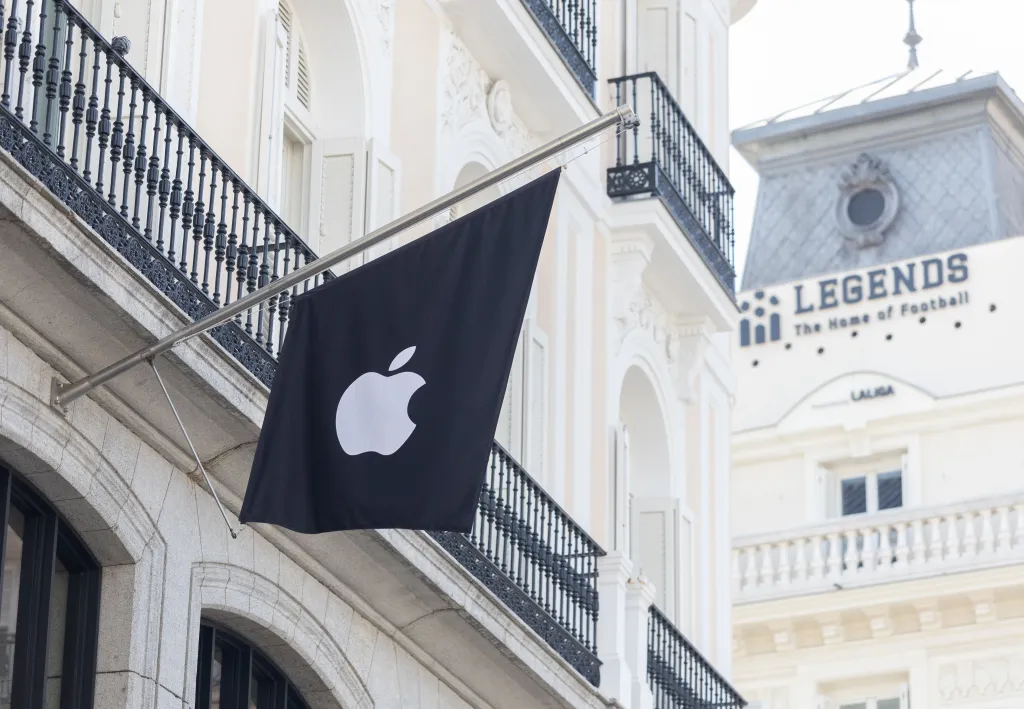

Apple’s stock recently achieved a significant milestone, briefly touching a market capitalization of $5 trillion. This valuation puts the iPhone maker in an exclusive club, a figure only Nvidia has previously reached. The surge follows a period where Apple reclaimed its position as the world’s most valuable company, surpassing the GPU giant which has since seen its valuation recede to around $4.79 trillion. This recent ascent appears to be fueled in part by reports suggesting Apple’s strategic push into the smart-home sector, with plans for a new Siri-powered home hub, updated Apple TV, and a fresh HomePod mini, all potentially launching by this fall. Furthermore, what was once seen as Apple’s cautious approach to AI investment, drawing criticism from Wall Street, is now being viewed by analysts and money managers as a prudent strategy, especially as hyperscalers may be overbuilding data centers, potentially leading to a market glut.
Despite this impressive financial performance and strategic maneuvering, the dramatic rise in Apple’s stock presents a complex scenario for investors. The company has become, by historical standards, exceptionally expensive, raising questions about its current valuation. On the day it hit $5 trillion, Apple’s price/earnings (P/E) ratio stood at 41.2. This figure positions Apple as the priciest member of the so-called Magnificent Seven, excluding Tesla, and significantly above competitors like Nvidia (30.2), Amazon (27.7), Meta (21.6), and Alphabet (16.8). Looking back, Apple’s P/E ratio rarely exceeded 20 between 2013 and 2020, averaging around 16. Even in the post-COVID era, its multiple hovered around a median of 28, and as recently as the close of the first quarter of 2024, it was 26.4.
The divergence between Apple’s earnings per share (EPS) and its stock price is particularly striking. From early 2022 through the first quarter of 2024, Apple’s EPS remained relatively flat, mirroring its share price during that period, with its P/E staying below 30. Profits began to accelerate around mid-2025, showing a 25% increase on a trailing, four-quarter basis through the first quarter of 2026. However, during this same timeframe, the stock price decoupled dramatically, doubling from $170 in the first quarter of 2024 to its current $350. This expansion, where shares grew at four times the rate of profits, propelled the P/E ratio to its current elevated level of over 41.
Apple has historically relied heavily on share buybacks to boost its EPS. In fiscal years 2024 and 2025, ending September 30, the company allocated $185 billion to repurchases, representing 92% of its GAAP net earnings. When its P/E ratio was around 25, these buybacks effectively increased EPS by approximately four cents for every dollar spent. However, at a P/E of 41, the impact is considerably diminished, lifting per-share profits by only about 2.4 cents per dollar.
This shift introduces two notable challenges for investors. Firstly, the effectiveness of share buybacks in enhancing EPS will be significantly reduced, as the company will be repurchasing shares at a much higher cost. Secondly, the sustainability of Apple’s P/E ratio at 41 is questionable. This figure is nearly 50% higher than the already elevated average of the S&P 500. Should its multiple revert to a more historical level, say 30, over the next five years, Apple would require an annual growth of 5% from a combination of repurchases and earnings expansion just to maintain its current share price. This implies that for its stock to continue appreciating, Apple must identify and successfully implement substantial new growth drivers.
While Apple’s core business operations remain robust, the exceptional performance of its stock creates a valuation conundrum. The disconnect between a healthy business and a stratospherically valued stock introduces a layer of risk for potential investors. The question now for many is whether Apple can deliver the kind of explosive growth necessary to justify its current price, or if a recalibration is inevitable.