
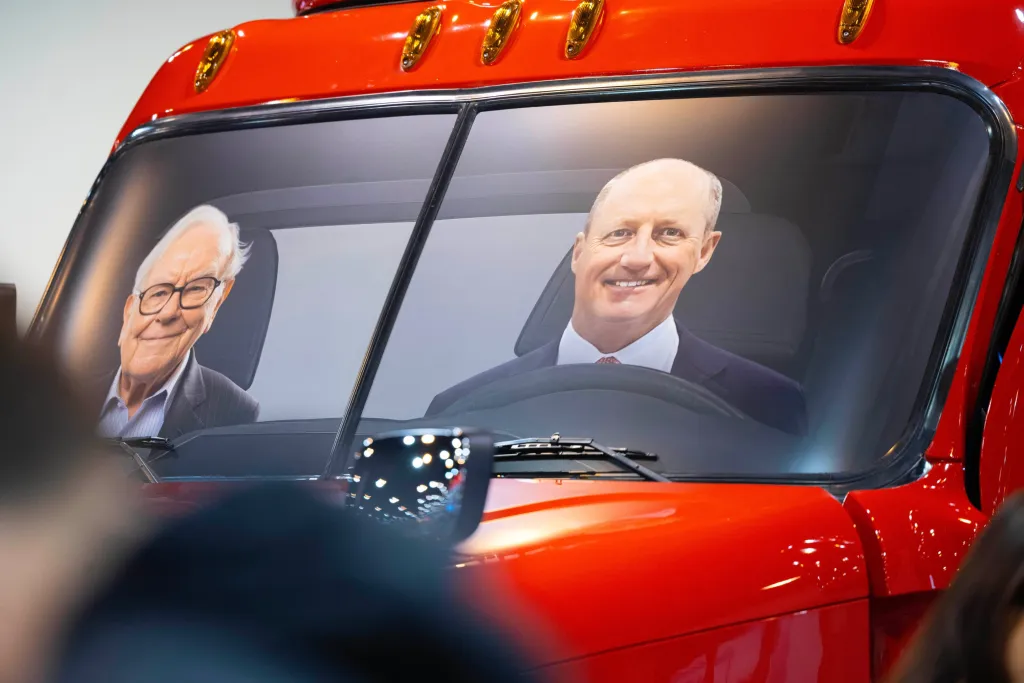

Berkshire Hathaway, the sprawling conglomerate built by Warren Buffett, significantly reduced its cash reserves in the second quarter, deploying capital into both public equities and its own stock. The company’s cash holdings, which stood at nearly $400 billion at the close of March, diminished to $365.5 billion by the end of June. This shift marks a notable acceleration in investment activity for the firm.
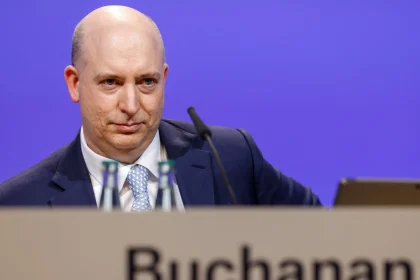
A substantial portion of this capital deployment went towards Alphabet, Google’s parent company, with a $10 billion investment. This move signals a strategic allocation towards one of the world’s dominant technology players. Beyond this external investment, Berkshire also engaged in significant share repurchases, buying back approximately $4.5 billion of its own stock during the quarter. This represents a marked increase from the first quarter, where only about $234 million in shares were repurchased, a figure that had initially underwhelmed investors. The company’s standard for share repurchases dictates that they occur only when CEO Greg Abel and Chairman Warren Buffett believe the stock is trading below its intrinsic value, rather than adhering to a fixed spending target. Most of these second-quarter buybacks were executed in June.
The second quarter also saw Berkshire Hathaway add over $24 billion worth of commercial, industrial, and other stocks to its portfolio, though the specific names of these companies will not be disclosed until a later regulatory filing. This aggressive investment posture comes as Greg Abel, who assumed the CEO role in January following Warren Buffett’s retirement from that position, continues to shape the company’s investment strategy. Buffett remains the company’s chairman. The recent repurchase activity, while substantial, still fell towards the lower end of analyst expectations, which had ranged from $5 billion to $11 billion based on previous charitable donation filings by Buffett.
Berkshire’s financial performance during this period also showed considerable strength. The company’s bottom-line profit more than doubled, reaching $25.667 billion, or $17,868.44 per Class A share. This significant increase was largely driven by a substantial paper gain in the value of its investments, contrasting sharply with the prior year’s figures which included a $3.8 billion writedown related to its Kraft Foods stake. However, Warren Buffett has consistently advised investors to focus on operating earnings as a more accurate reflection of the performance of Berkshire’s diverse array of businesses, which span insurance, utilities, and manufacturing.
Looking at operating earnings, the picture also remained robust. Berkshire’s operating profit grew to $12.983 billion, or $9,038.30 per A share, up from $11.16 billion, or $7,759.58 per Class A share, in the same period last year. This metric excludes the volatility of investment gains and losses, providing a clearer view of the underlying health of companies like Geico, BNSF railroad, Precision Castparts, and See’s Candy. While these quarterly figures do not yet reflect it, Berkshire also completed the $6.8 billion acquisition of homebuilder Taylor Morrison in July, indicating further strategic moves beyond the reported period. The conglomerate has a history of significant share repurchases, having bought back $78 billion worth of its own stock between 2018 and 2024, underscoring a consistent belief in the value of its own shares when market conditions align with its internal valuations.