

A significant transformation is underway in China’s aerospace landscape, largely unnoticed by many in the West. While public attention often remains fixed on state-sponsored programs, a burgeoning private space industry has taken root and grown exponentially over the past decade. With over 400 commercial space companies now operating, China is rapidly expanding its capabilities across a spectrum of space-related endeavors, from reusable rockets to satellite constellations and even speculative asteroid mining ventures. This growth reflects a profound shift from a purely state-controlled model to one that increasingly incorporates private enterprise and innovation.
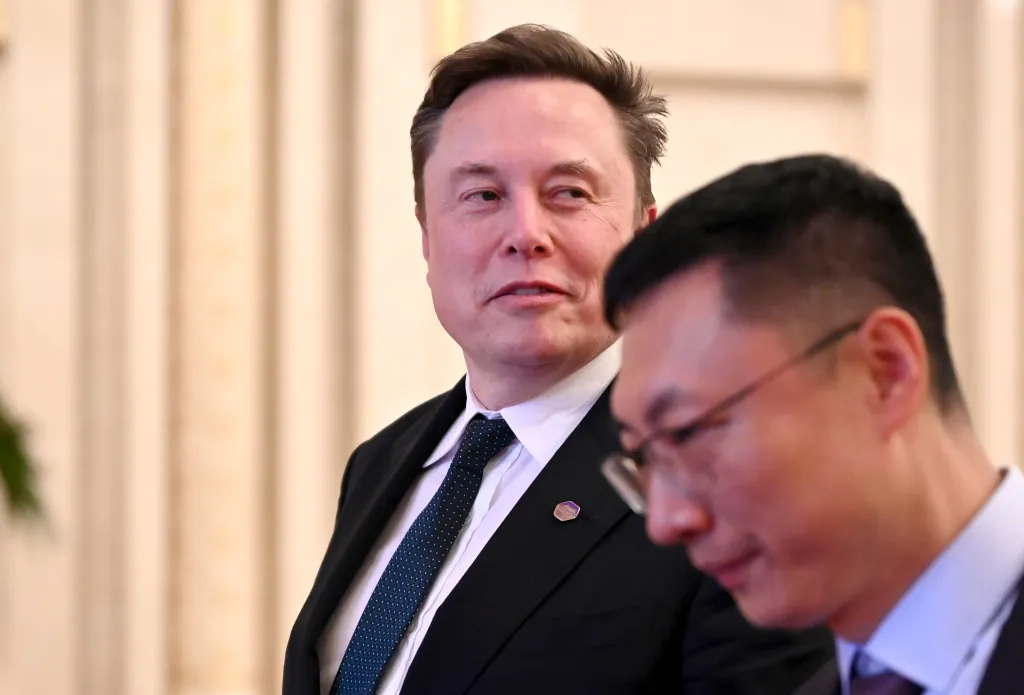
Until 2014, China’s space activities were almost exclusively the domain of government agencies and large state-owned enterprises. A series of policy reforms initiated that year, however, opened the door for private investment and entrepreneurial activity. This policy pivot was significantly influenced by the global rise of companies like SpaceX. Initially, Chinese policymakers may have underestimated the impact of Elon Musk’s company, but the dramatic reduction in launch costs achieved through reusable rockets, particularly the Falcon 9, and SpaceX’s subsequent dominance in global launch markets, prompted a re-evaluation. Chinese leadership recognized that maintaining competitiveness in the strategically vital space industry necessitated fostering a dynamic private sector, rather than relying solely on traditional state organizations.
The result has been a rapid proliferation of new companies. Many of these firms were founded by engineers who previously worked within state-owned aerospace entities, but sought greater agility and less bureaucracy. By 2022, the number of private space companies in China had reached approximately 430. The collective valuation of the country’s 100 largest space firms was estimated to be around $100 billion by 2024, signaling a robust and well-funded ecosystem. This growth trajectory mirrors China’s historical approach to industrial development, where foreign innovations are often absorbed, improved upon, and eventually leveraged to establish global competitiveness, a pattern observed in sectors ranging from automotive to telecommunications.
Chinese space startups have already begun to achieve notable milestones, underscoring their rapid development. LandSpace, established in 2015, made headlines in 2023 by successfully orbiting a methane-powered rocket, the Zhuque-2, a feat that both SpaceX’s Starship and Relativity Space’s Terran 1 failed to achieve that same year. Methane is considered a highly promising fuel for future reusable rockets and interplanetary missions. Another firm, i-Space, became the first Chinese private company to launch a rocket into orbit back in 2019. Galactic Energy has also emerged as a significant player in launch services, actively developing reusable rockets and exploring opportunities in asteroid mining. CAS Space is pursuing commercial space tourism missions while Deep Blue Aerospace plans suborbital tourist flights starting in 2027, reminiscent of Blue Origin’s business model.
Beyond launch capabilities, China’s private space sector is also diversifying into other critical areas. Companies are increasingly focused on developing satellites, advanced satellite communication systems, Earth observation technologies, and navigation services, alongside manufacturing components for the broader space economy. A compelling example of this diversification is Geely, one of China’s largest private automobile manufacturers. In 2018, Geely established Geespace, a subsidiary dedicated to building a low-Earth-orbit satellite constellation. By late 2025, Geespace had already deployed 64 satellites, with plans to expand to 240, aiming to integrate satellite communications, navigation, and Earth observation into future autonomous vehicles. The company has already forged partnerships with telecommunications operators in over twenty countries, demonstrating an outward-looking strategy.
The relationship between these private Chinese space companies and the government is complex. While they often benefit from state support through subsidies, tax incentives, and access to launch facilities, this assistance also comes with potential constraints. Unlike their American counterparts, Chinese firms operate within a political system that is unlikely to tolerate the kind of independent, influential figures seen in the West, such as Elon Musk. The well-documented experience of Jack Ma, who saw his business empire curtailed after public criticism of financial regulators, serves as a stark reminder of these limits. This dynamic raises questions about the long-term willingness of Chinese entrepreneurs and investors to undertake the extraordinary risks often required for groundbreaking space exploration, where success frequently hinges on accepting substantial financial outlays on projects with uncertain outcomes.
Despite these potential complexities, underestimating China’s private space sector would be a miscalculation. The emergence and sustained growth of these companies have occurred even as the broader trend under Xi Jinping has often leaned towards a greater role for the state in the economy. While the United States, particularly through SpaceX, still holds a significant lead in certain areas, China is building considerable depth across the entire industry. Dozens of Chinese companies are now actively competing in launch services, satellite development, communications technologies, and space manufacturing. This broad-based development suggests that the pattern observed in other Chinese industries—initial imitation followed by improvement and ultimately innovation—is likely to unfold in the space sector as well.