
The crypto venture capital landscape is reportedly undergoing a “mass extinction event,” a stark declaration from Rob Hadick, a general partner at Dragonfly Capital. Yet, against this backdrop of industry contraction and investor apprehension, Dragonfly Capital has successfully closed its fourth fund, amassing $650 million. This achievement positions the firm to continue its trajectory, having already carved out a significant presence in the digital asset space, often mentioned alongside established players like Andreessen Horowitz and Paradigm.
Hadick’s journey to Dragonfly itself mirrors some of the market’s volatility. He signed on in April 2022, shortly before a planned six-month hiatus mandated by his former employer, GoldenTree. This period of forced leisure, intended for the Hamptons, was abruptly interrupted by the implosion of Terra Luna and the subsequent market contagion. He recalls observing the unfolding crisis on Twitter, even confiding to his wife, “I don’t think you understand what’s happening to our net worth. I am drinking whiskey in a dark room at 2 p.m. on a Tuesday.” His official start at Dragonfly coincided with another significant market shock: the collapse of FTX in November of that same year. Despite these turbulent beginnings, Hadick remained committed to the crypto sector, driven by the prospect of deploying the firm’s substantial capital.
Dragonfly’s third fund, totaling $500 million, played a crucial role in elevating its standing. Through strategic investments in companies such as Polymarket, Rain, and Ethena, the firm demonstrated a knack for identifying promising ventures even as the broader market faced headwinds. Polymarket, a prediction market platform, was a company Dragonfly had nearly invested in during its seed round in 2020. Though they ultimately passed on the initial opportunity, the firm later led its Series B funding, recognizing its potential. Ethena, a synthetic dollar project, presented a particularly challenging pitch to investors still reeling from the Terra Luna collapse. Its founder, Guy Young, faced skepticism, with many dismissing the concept as “insane.” However, Dragonfly saw past the immediate market sentiment, leading Ethena’s $6 million seed round. This early belief has paid dividends, with Ethena’s stablecoin now boasting a market capitalization of approximately $6.3 billion.
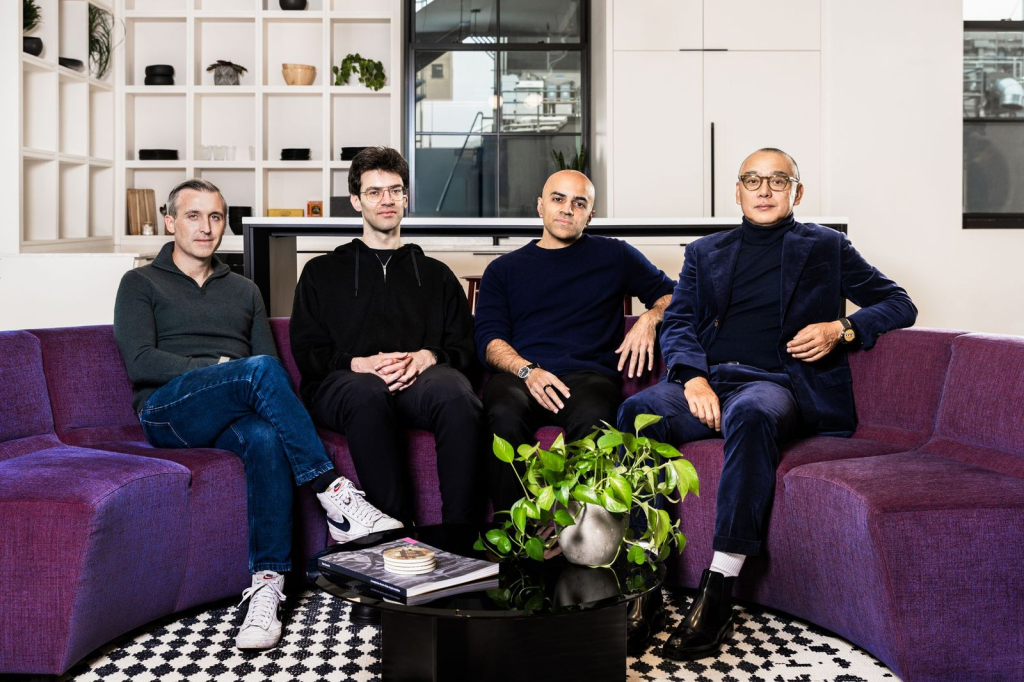
The firm’s strategic approach is underpinned by a diverse leadership team. Rob Hadick brings a fintech-focused perspective, bridging traditional finance with the nascent crypto world. Haseeb Qureshi, a former professional poker player and Silicon Valley engineer, serves as a public face and ambassador for the firm, known for his insights on the “Chopping Block” podcast and active engagement on Crypto Twitter. Tom Schmidt contributes his expertise as a DeFi specialist, having quickly risen through the ranks to become a general partner. The enigmatic founder, Bo Feng, an influential figure in the Chinese tech scene with reported connections to China’s political elite, provides strategic guidance and a crucial link to Asian markets, though he maintains a low public profile.
Dragonfly’s evolution has not been without its challenges. The firm began as a partnership between Feng and Alex Pack, a young venture capitalist. However, differing visions for the firm’s future led to Pack’s departure in 2020. Around the same time, the Chinese government’s crackdown on crypto forced Dragonfly to relocate its Asia operations from Beijing to Singapore. Despite these shifts, the firm has maintained a presence in Asia, recognizing the region’s significant user base for many decentralized applications.
The initial vision for Web3, centered on decentralized alternatives to existing internet services and token mechanisms, has evolved. As Hadick observed, the industry is increasingly converging with Wall Street. Early crypto sought to create electronic cash, followed by Ethereum enabling decentralized financial applications. However, investors like Hadick, with backgrounds in traditional finance, believe crypto will ultimately encompass the functions of conventional banks and brokerage firms. This shift is reflected in the types of companies Dragonfly now backs, which often resemble financial products rather than purely blockchain-based games. This perspective, shared by other industry figures, suggests a “financial era of blockchains,” where the focus is less on native tokens for various protocols and more on tokens representing real-world assets. As Schmidt noted, the need for decentralized financial systems remains strong globally, despite the market’s current state.
In a market characterized by volatility and a reported “mass extinction event” for many crypto venture capital firms, Dragonfly Capital’s ability to secure $650 million for its fourth fund underscores a resilient strategy and a belief in the long-term potential of the digital asset space. The firm continues to navigate an industry in flux, ready to deploy its new capital into the next wave of blockchain innovation.