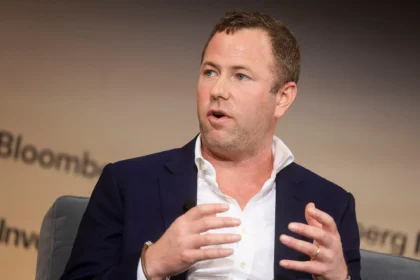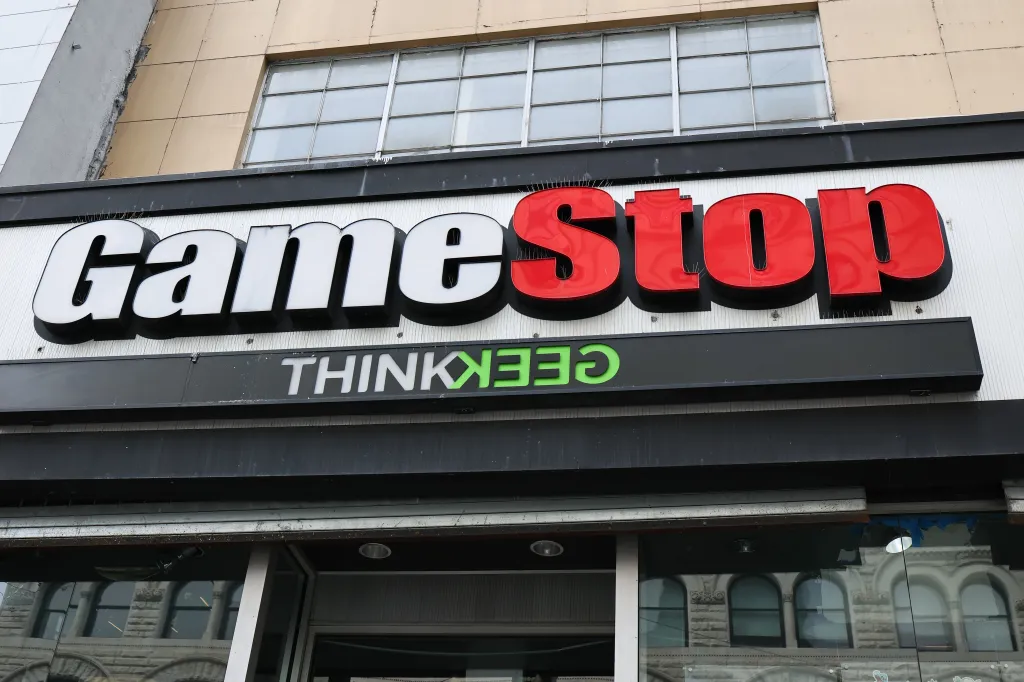

Ryan Cohen, the billionaire CEO whose involvement reignited GameStop’s stock in 2021, is now charting an ambitious course for the company, aiming to transform the video game retailer into a $100 billion-plus enterprise through a significant acquisition. This strategic pivot, detailed in an interview with The Wall Street Journal, moves beyond the company’s traditional focus on video games and collectibles, signaling a potential reinvention for the widely recognized brand. Cohen himself acknowledges the high stakes, describing the endeavor as either “genius or totally, totally foolish.”
The plan involves acquiring a publicly traded company, ideally within the consumer or retail sector, a move that could dramatically expand GameStop’s market capitalization. Cohen’s vision is substantial, considering the current approximate $9.3 billion market capitalization of GameStop. This current valuation represents a considerable increase from $1.3 billion in 2021, a 615% rise in stockholder value under his leadership, yet it falls significantly short of the $100 billion target. The company’s board has also incentivized this goal, approving a compensation package for Cohen valued at over $35 billion in stock options, contingent on achieving the $100 billion market capitalization and $10 billion in Cumulative Performance EBITDA.
This isn’t Cohen’s first foray into building and selling successful ventures. He previously founded Chewy, the online pet food retailer, which was acquired by PetSmart for $3.35 billion before going public with a valuation exceeding $8 billion. This track record lends a certain credibility to his current aspirations, though the scale of the GameStop challenge is considerably larger. Cohen is also GameStop’s largest individual investor, holding a stake of over 9%, aligning his personal financial interest directly with the company’s future performance.
However, the path to a $100 billion valuation is fraught with skepticism from industry observers. Michael Pachter, a managing director of equity research at Wedbush Securities, casts doubt on the feasibility of Cohen’s plan. Pachter suggests the probability of GameStop reaching such a market capitalization is extraordinarily low, citing the lack of a clear, unique competitive advantage beyond the company’s substantial cash reserves, which stood at $8.83 billion last October. According to Pachter, GameStop’s core physical game model faces an existential threat from digital downloads, a challenge he believes the company is ill-equipped to overcome.
GameStop’s recent attempts at modernization have yielded mixed results. Last May, a venture into cryptocurrency, involving the purchase of 4,710 Bitcoins valued at approximately $500 million, initially boosted the stock before a subsequent 10% decline. Similarly, an announcement in June to focus on trading card sales led to a 20% drop in stock value during a quarterly investor call. These instances highlight the difficulty in pivoting a legacy business model in a rapidly evolving market.
Despite these challenges and the skepticism, Cohen has found a notable supporter in hedge fund investor Michael Burry, known for his accurate prediction of the 2008 housing market crash. Burry recently disclosed his investment in GameStop shares through a Substack post on January 26, stating his belief in Cohen and the company’s long-term strategy. He expressed confidence in the current setup, governance, and strategy, indicating his willingness to hold the shares over an extended period. This endorsement from a prominent investor could provide a measure of validation for Cohen’s ambitious, and some might say audacious, vision for GameStop’s future.