

The financial markets reacted sharply this week as the conflict involving the U.S. and Iran escalated, pushing oil prices above $100 a barrel for the first time since 2022. This surge corresponds with a significant downturn in equity markets, with Dow Jones industrial average futures dropping over 900 points, reflecting growing investor apprehension about a prolonged engagement. The initial hopes for a swift resolution have dissipated, replaced by concerns that the conflict could expand further, impacting global trade and resource availability.
President Donald Trump addressed the rising energy costs over the weekend, utilizing Truth Social to downplay the impact of short-term oil price increases. He characterized the current situation as a “very small price to pay” for U.S. and global safety, suggesting that prices would rapidly decline once the “destruction of the Iran nuclear threat is over.” This statement came as U.S. oil futures climbed 17.2% to $106.57 a barrel, and Brent crude saw a 15.2% increase, reaching $106.81. Industry analysts, like Patrick De Haan of GasBuddy, are now estimating an 80% probability that gasoline prices at the pump will exceed $4 a gallon within the next month.
Beyond energy, the broader financial landscape also registered substantial shifts. S&P 500 futures fell 1.69%, and Nasdaq futures experienced a 1.73% decline. Gold, often seen as a safe-haven asset, surprisingly dipped 1.56% to $5,078 per ounce, while silver saw a more significant drop of 3.4% to $81.43. The yield on the 10-year Treasury note increased by 5.1 basis points, reaching 4.183%, indicating expectations of heightened inflation. Concurrently, the U.S. dollar strengthened against major currencies, rising 0.87% against the euro and 0.37% against the yen.
The direct impact of the intensifying conflict is manifesting in critical infrastructure. The Strait of Hormuz, a vital chokepoint for global oil shipments, remains effectively closed, realizing a long-standing “nightmare scenario” for energy markets. This closure has compelled major oil producers in the Persian Gulf to reduce output as storage capacity reaches its limits, with Iraq’s production, for instance, collapsing by 60%. Moreover, reports indicate attacks on desalination plants in Bahrain and Iran, raising concerns about water scarcity in a region where some nations depend on processed seawater for up to 90% of their supply. Prior intelligence assessments had warned that damage to such infrastructure could necessitate evacuations from densely populated areas.
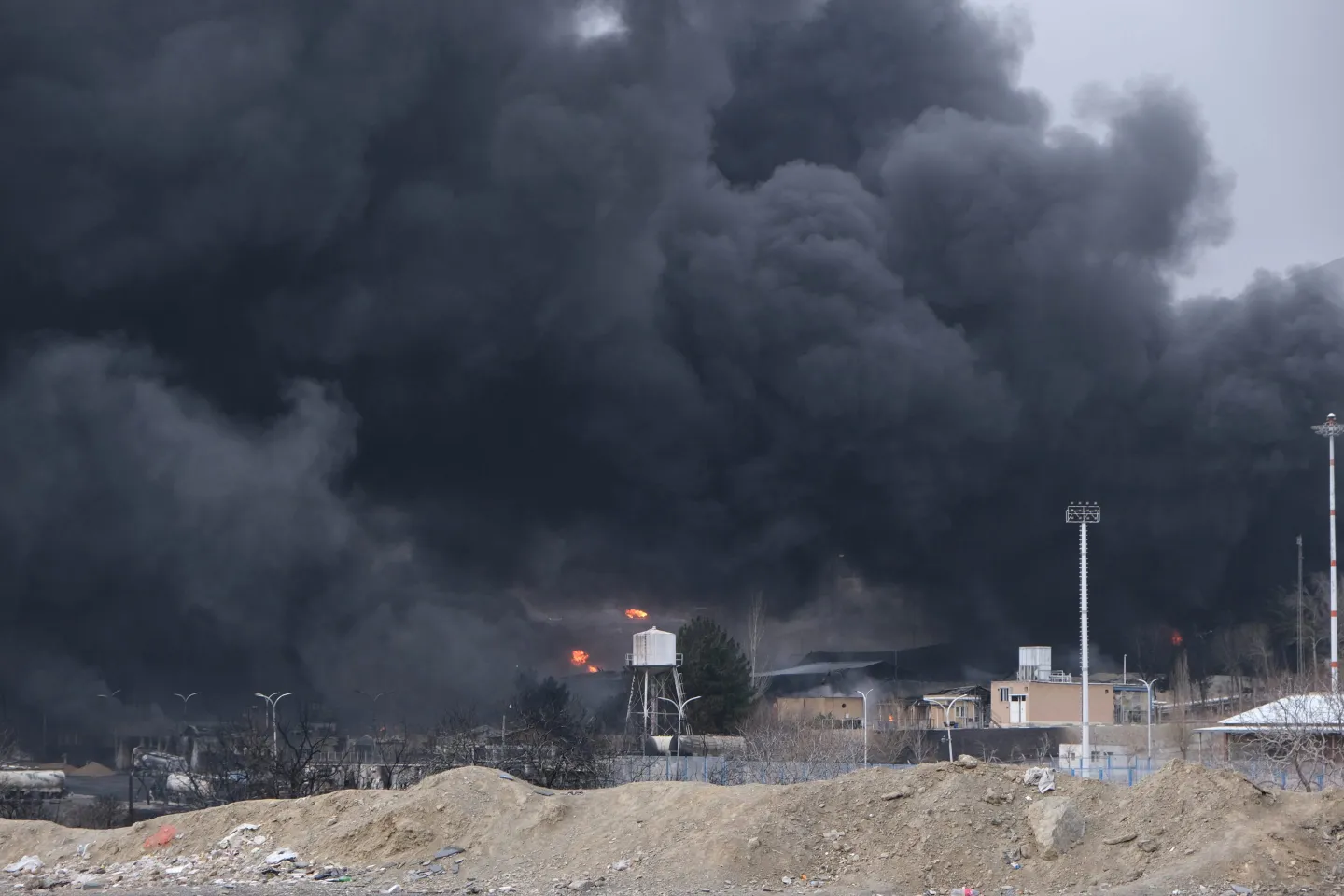
Military actions have also broadened in scope. An oil depot in Tehran was reportedly attacked by U.S. and Israeli forces, resulting in widespread smoke, acid rain, and oily precipitation over the city. Iran, in turn, has targeted oil and civilian infrastructure across the Gulf using missiles and drones. The Pentagon confirmed the death of a seventh U.S. service member, and sources cited by Bloomberg suggest that President Trump is considering a special forces mission to enter Iran and secure near-bomb-grade uranium. The potential for wider regional involvement is also a growing concern, with Gulf states reportedly issuing warnings to Tehran regarding continued attacks, and Turkey potentially deploying forces to northern Cyprus. Russia is also said to be providing intelligence to Iran concerning U.S. military assets in the region.
Leadership changes within Iran further complicate the situation. Following the death of Ayatollah Ali Khamenei last weekend, his son, Mojtaba Khamenei, has been announced as the next supreme leader. This appointment signals a continued hardline stance, particularly given President Trump’s earlier rejection of Mojtaba Khamenei as a viable leader, stating to Axios, “Khamenei’s son is unacceptable to me. We want someone that will bring harmony and peace to Iran.” This succession suggests that the Iranian regime is poised to resist any compromises with the U.S., aligning with Trump’s own concerns expressed in the Oval Office last week about a “worst-case” scenario where an equally uncooperative leader assumes power.