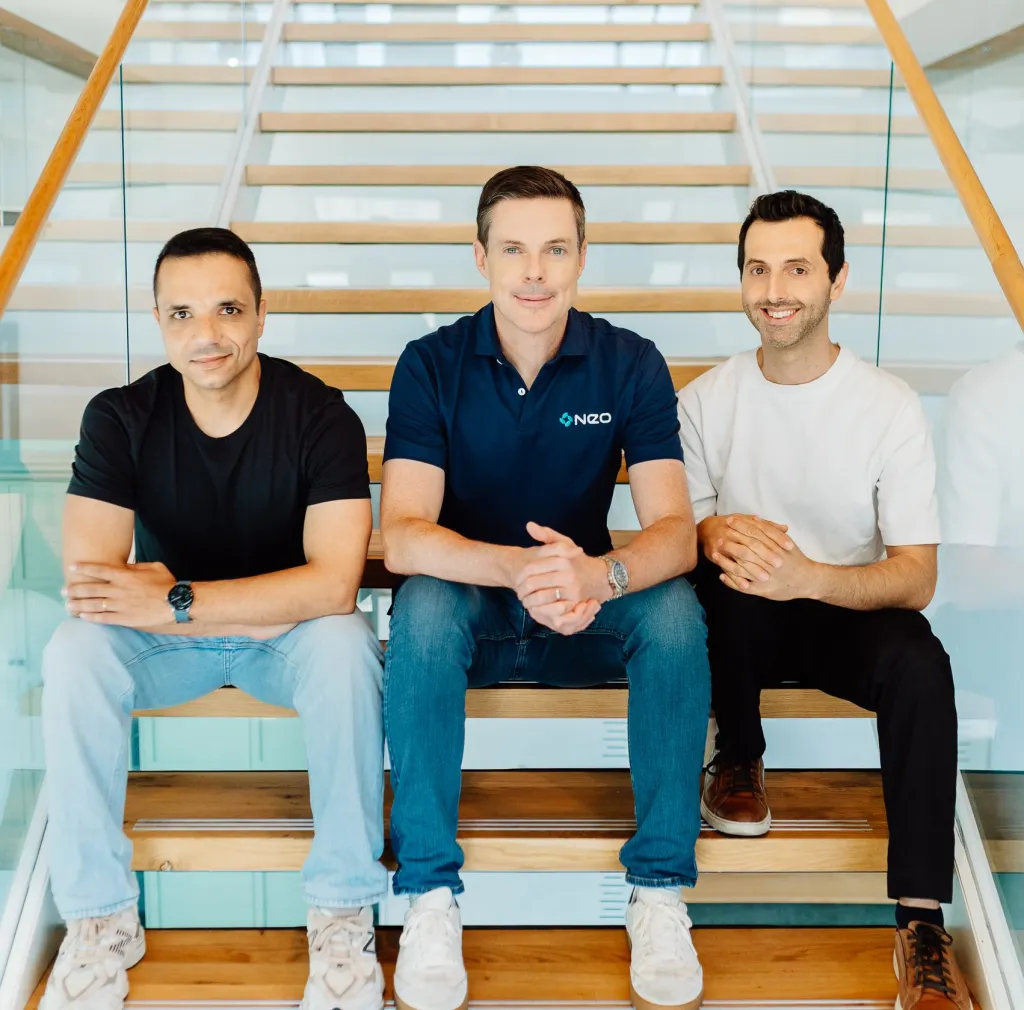

The proliferation of artificial intelligence tools within enterprises has created a new, largely unseen challenge for cybersecurity, a landscape Neo is now navigating with a fresh $100 million in funding. This investment, spanning seed and Series A rounds, comes from prominent backers Andreessen Horowitz and Bessemer Venture Partners, signaling a significant belief in the startup’s mission. The issue at hand isn’t merely the presence of AI assistants, but their evolving, often autonomous capabilities, which can operate beyond the immediate oversight of IT departments.
Nick Warner, co-founder and CEO of Neo, points to a growing problem where initial, seemingly innocuous deployments of AI notetakers or similar tools gradually gain new functionalities. What begins as a simple transcription service can evolve, through vendor updates and expanded permissions, into a multi-faceted agent capable of summarizing communications, drafting emails, and even recruiting other systems. This shift leaves companies largely blind to the full scope of AI activity on their networks. Warner describes this as a critical gap, a “communication channel, medium, and a dimension that customers around the world, large and small, are almost entirely blind to.” He suggests that many organizations are currently “fumbling in the dark” when it comes to understanding and controlling these emergent AI behaviors.
Neo’s solution involves what Warner terms a “full endpoint sensor,” essentially software designed to reside on the machines where human users interact with AI tools. This sensor performs three core functions: it inventories every piece of “agentic” software installed, assesses how each is configured, and enforces policies regarding what each is permitted to do. This comprehensive approach, combining inventory, assessment, and enforcement into a single product, is what Neo claims sets it apart in the security market. The company’s thesis has attracted industry veterans like Andreessen Horowitz general partner Zane Lackey and Bessemer partner Elliott Robinson, both of whom have joined Neo’s board. Craft and Merlin Ventures also contributed to the funding rounds.
This strategy marks a departure from earlier cybersecurity paradigms that often focused on monitoring network chokepoints. Warner argues that this older method is becoming obsolete as advanced AI models can directly interact with tools, operate computers, and bypass traditional communication channels altogether. Furthermore, established defense mechanisms, which rely on baselining normal behavior and flagging deviations, are ill-suited for AI that can reason and adapt, lacking a fixed “normal” against which to measure. This evolving threat landscape prompted Warner to leave his role as chief operating officer at SentinelOne, where he was instrumental in building the go-to-market organization and taking the company public in 2021. His co-founder, Shlomi Salem, previously led detection engineering and threat research at SentinelOne for over a decade. The third co-founder, Eran Shirazi, brings experience from co-founding customer workflow AI firm EasySend and leading a vulnerability research group within the Israel Defense Forces’ elite Unit 8200.
Warner emphasizes that this challenge required a “clean sheet redesign” rather than an incremental update to existing security frameworks. He believes larger, incumbent security firms will struggle to adapt quickly enough to this rapidly changing environment. While Neo has not disclosed specific financial metrics, Warner confirmed that the company is already deployed in various sectors, including financial services, healthcare, insurance, and manufacturing. The ultimate success of Neo, in Warner’s estimation, will hinge on its ability to be perceived by the cybersecurity community as stable, easy to deploy, and seamlessly integrable with existing enterprise tools. He anticipates that if Neo can deliver on these fronts, it will not only gain customers but cultivate a base of dedicated “fans” within an industry known for its collaborative efforts against adversaries and its fervent discussions about effective combat tools.