

Nathan Laine—Bloomberg/Getty Images; Chance Yeh—Getty Images
The AI industry is approaching a financial inflection point that Wall Street is increasingly treating as inevitable: the moment the sector as a whole turns cash-flow negative, forcing hyperscalers to start pulling back on the capex that’s fueled the AI buildout for years.
The numbers behind that shift are stark. According to research from Stijn Van Nieuwerburgh of Columbia Business School, capex at Oracle, Microsoft, Amazon, Meta and Alphabet will surpass the five companies’ combined operating cash flow for the first time in 2026. Bank of America projects the group’s aggregate free cash flow swinging from +$180 billion in 2025 to -$64 billion in 2026, then deepening further to -$144 billion in 2027.
Alphabet’s own numbers illustrate how fast the picture has shifted: the company’s free cash flow turned negative in the second quarter of 2026, the first time that’s happened since its 2004 IPO, even as it raised its 2026 capex guidance to between $195 billion and $205 billion. D.A. Davidson’s Gil Luria called the shift a genuine warning sign: “The fact that we crossed over to negative cash flow was kind of a negative milestone.”
Wells Fargo’s Ohsung Kwon told clients the market will likely start pricing in a 2027 capex peak “after 3Q EPS and midterms,” suggesting Wall Street’s repricing of AI spending sustainability is already underway, just waiting for the right catalyst to move from analyst notes into actual stock prices.
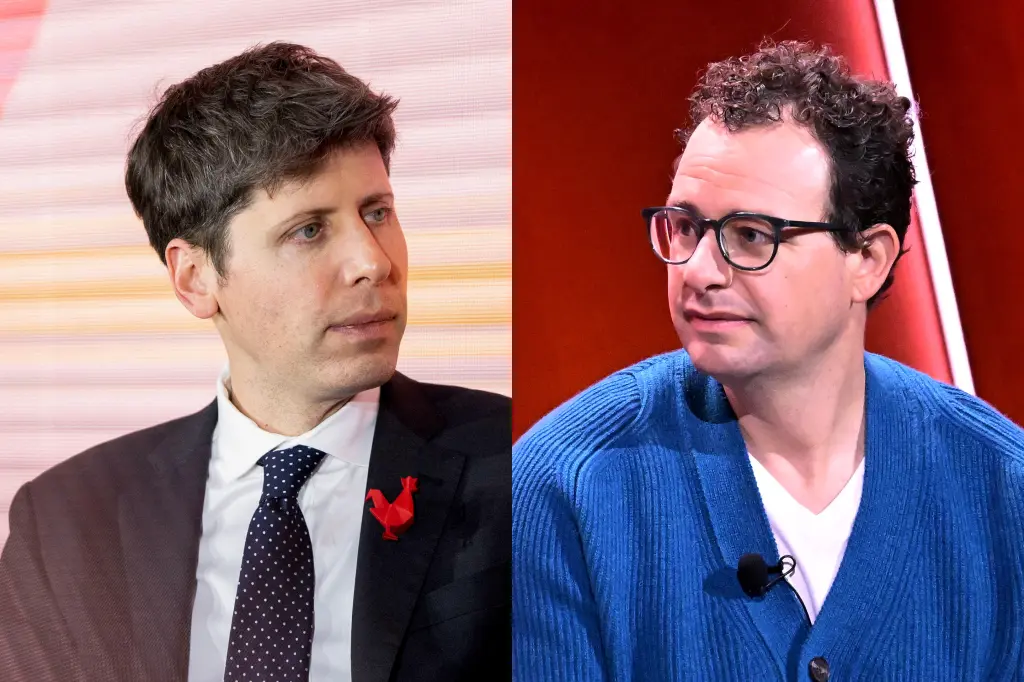
The financial strain is unfolding alongside a parallel debate over whether AI development itself needs to slow down, one led by two of the industry’s most prominent executives pictured together here: OpenAI CEO Sam Altman and Anthropic CEO Dario Amodei. Amodei has pushed publicly for a slowdown in how quickly AI labs push their most advanced models forward, even as Anthropic itself meets with prospective investors ahead of its own market debut. Altman backed the substance of Amodei’s proposal, and separately signaled OpenAI wouldn’t rush to go public either, saying “right now would be an ill-advised moment to go public.”
Taken together, the financial math and the executives’ own public caution point in the same direction: an industry that has spent years justifying near-unlimited capex on the promise of future returns is now facing the moment those returns need to start showing up, or the spending itself will have to slow.