
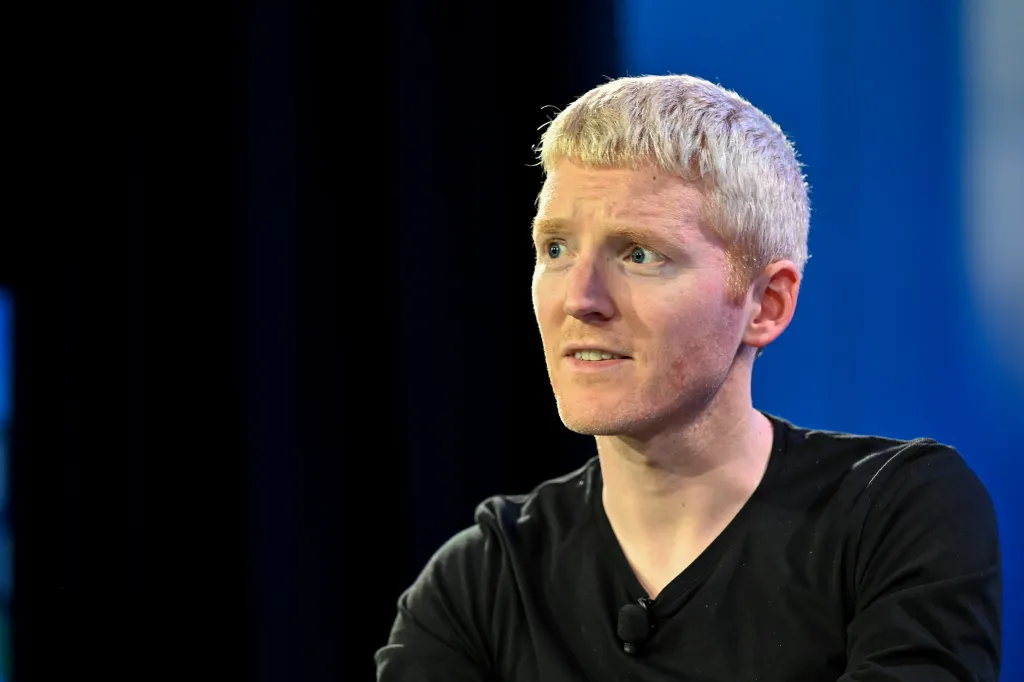
A significant upheaval could be on the horizon for the digital payments industry, as reports indicate Stripe, alongside private equity firm Advent, has made an offer to acquire PayPal. This potential transaction, reportedly valuing PayPal at over $53 billion, represents a 28% premium above its price before the news became public. Such a merger would reshape the competitive landscape, creating one of the world’s largest online payment processing entities.
Stripe, a company founded by the Collison brothers in 2010, remains privately held and boasts a valuation of approximately $159 billion. Its reported approach to PayPal in April initially went unanswered, but the subsequent news of a formal offer, financed by banks, has undeniably captured the attention of PayPal CEO Enrique Lores and its board, evidenced by a 15% surge in PayPal’s share price following the reports. The strategic implications of such a consolidation are vast, potentially leading to a combined entity processing around $3.7 trillion in transactions annually and generating $53 billion in revenue. This scale could also enable the merged company to reduce fees paid to major card networks like Visa and Mastercard by keeping more transactions within its own ecosystem.
PayPal’s journey in recent years has been turbulent. While the company, which still owns Venmo, experienced substantial growth during the pandemic lockdowns driven by a surge in e-commerce, this momentum began to wane by mid-2022. Since then, PayPal has faced intense competition from a diverse array of players, ranging from tech giants like Apple and Google to specialized financial services providers such as Shop, Affirm, Klarna, and Block, not to mention Stripe itself. The departure of longtime customer eBay, which transitioned to Adyen in 2018, further underscored the competitive pressures. Investors have reflected this sentiment, with PayPal’s market value declining by 40% over the trailing year. Enrique Lores, who took the helm in March after a 30-year career at HP, is currently in the early stages of implementing a turnaround strategy.
Meanwhile, the broader technological landscape continues to evolve rapidly, particularly in artificial intelligence. China’s new regulations, for instance, are setting boundaries for AI chatbots, prohibiting them from fostering emotional reliance or engaging in virtual relationships with minors. These “Interim Measures for AI Anthropomorphic Interactive Services,” issued in April, are believed to be the first of their kind globally, prompting companies like Alibaba and ByteDance to modify their chatbot functionalities to comply with government directives. This regulatory environment highlights the increasing scrutiny and control governments are exerting over AI development and deployment.
In a related development, Apple’s generative AI suite, Apple Intelligence, has received regulatory approval for use on iPhones sold in China. This approval, however, comes with a notable condition: the service will reportedly be powered, in part, by AI models developed by Chinese tech firms Alibaba and Baidu. Huawei, Oppo, Nubia, Samsung, Vivo, and Xiaomi also secured approvals for their AI services. While a debut date for Apple Intelligence in China has not yet been set, and it could be several months away, this represents a crucial step for Apple. The company had previously rolled out Apple Intelligence in the U.S. in 2024 and Europe in 2025, but China’s strict licensing requirements for AI services necessitated this extended waiting period. With Greater China accounting for over 20% of Apple’s global revenue, and the iPhone 18 family release anticipated in September, this regulatory clearance arrives at a critical juncture for the company.
Innovation in AI also continues outside of established tech giants. Mira Murati, former OpenAI CTO, has launched her startup Thinking Machines, which recently unveiled its first AI model, Inkling. This open-weight model, with 975 billion parameters, is designed to be more compact, faster, and more cost-effective to operate compared to larger models from competitors like Anthropic and OpenAI. While Inkling is not positioned as the strongest overall model currently available, its ability to reason natively across text, images, and audio, coupled with its balanced cost-performance ratio, makes it a suitable foundation for fine-tuning. Thinking Machines advocates for an ecosystem of diverse AI models, emphasizing competition and learning to prevent centralized AI structures from prioritizing providers over users, a philosophy articulated in a recent company manifesto.