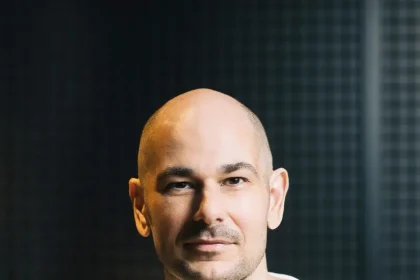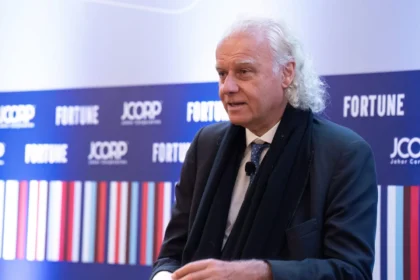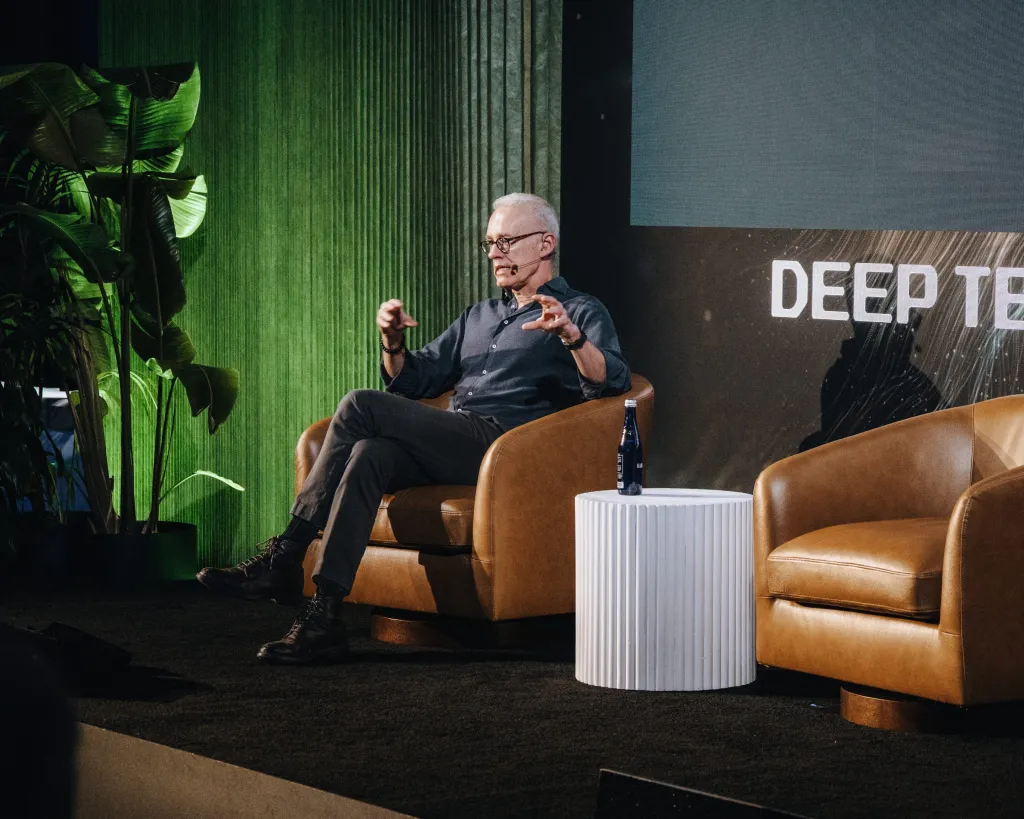

Kevin Ryan, often recognized for his foundational role in the New York City tech scene, is steering his venture firm, AlleyCorp, into a new phase with the announcement of a $335 million second fund. This development comes on the heels of the firm taking on outside investors for the first time in 2024, securing a $250 million fund. AlleyCorp’s history is rooted in a family office established in 2007, from which Ryan has co-founded numerous companies including MongoDB, Business Insider, Gilt Groupe, and Zola. The firm’s long-standing strategy of early-stage incubation appears to be a core principle guiding its current ventures, despite the significant shifts in the broader venture capital landscape.
Ryan himself has a track record extending back to his leadership at DoubleClick, which he grew to 1,500 employees before its $1.1 billion sale in 2005. His current approach emphasizes identifying nascent opportunities before they become widely apparent. He articulated this philosophy by stating that waiting until an idea is “obvious” means it’s already too late and likely valued at $20 billion. This foresight recently led him to a significant bet on psychedelics, a field he approached with skepticism until 2018. After encountering data, particularly inspired by Michael Pollan’s “How to Change Your Mind,” Ryan became a key backer of the Yale Center for Psychedelic Research and co-founded Transcend Therapeutics, which was acquired for $1.2 billion in June.
The venture capital ecosystem has seen considerable evolution, particularly with the acceleration of the AI boom. While some firms are deploying massive sums into a handful of AI giants, Ryan maintains that AlleyCorp’s fundamental investment principles remain largely unchanged. He noted a recent investment in a company with $500,000 in revenue at a $25 million valuation, underscoring their commitment to helping businesses grow from an early stage. AlleyCorp’s current focus areas include healthcare, deep tech, and general technology, with a portfolio that already boasts eight unicorns, including Rogo, ShopMy, Valar Atomics, and Thyme Care.
Ryan distinguishes between traditional venture capital and the substantial capital flowing into entities like OpenAI and Anthropic. He considers the latter to be in a separate category, suggesting these investments are on a scale typically reserved for public companies, rather than early-stage venture funding. He theorized that if these mega-deals were excluded, the overall perception of venture capital deployment might appear to be in decline. AlleyCorp, by contrast, is committed to writing first checks under $10 million and supporting younger companies through their initial growth phases.
Despite this focus on early-stage, smaller checks, the possibility of larger funds in the future is not off the table for AlleyCorp. Ryan clarified that expanding fund size would not necessarily alter their core strategy but would rather enable growth through new verticals or geographical expansion. He suggested a larger fund, perhaps $500 or $600 million, could support the inclusion of dedicated biotech personnel and a specialized biotech practice, for example, without shifting their fundamental approach to investment.
The rapid pace of technological change, particularly in artificial intelligence, presents both challenges and opportunities for investors. Ryan reflected on previous miscalculations, such as the widespread belief in 2017 that 50% of cars would be driverless by 2026, a prediction that has not materialized. Yet, he also expressed astonishment at the unprecedented speed of AI development, an observation that resonates with the recent publication of Sebastian Mallaby’s “The Infinity Machine,” a book on DeepMind. Ryan pointed out that even a book published as recently as 12 to 18 months ago can feel outdated in the current AI climate, omitting discussions about now-prominent entities like Claude. This dynamic environment, he suggested, highlights the critical need for adaptability and a willingness to re-evaluate perspectives as new information emerges.