

Getty Images
Apple’s annual profit climbed from roughly $2 billion in 2006 to about $112 billion in 2025, a nearly 60-fold increase in under two decades, a transformation that reshaped not just the company’s balance sheet but what kind of business Apple actually is.
Much of that shift traces back to a category that barely existed 15 years ago. Services, spanning the App Store, iCloud, Music, TV, payments and advertising, is now projected to generate more than a quarter of this year’s revenue, giving Apple a high-margin, recurring revenue stream layered on top of its hardware business. The iPhone still anchors the company, accounting for roughly half of 2025 sales, but it no longer has to carry the business alone.
Geography did the rest of the work. Apple has truly gone global, with sales now flowing steadily from Europe, Greater China, Japan and the wider Asia-Pacific region, supported by a retail footprint of more than 500 stores worldwide. That global reach, paired with tight supply-chain discipline and cash-flow strength, became the operational backbone that let Apple scale profit far faster than revenue alone would suggest.
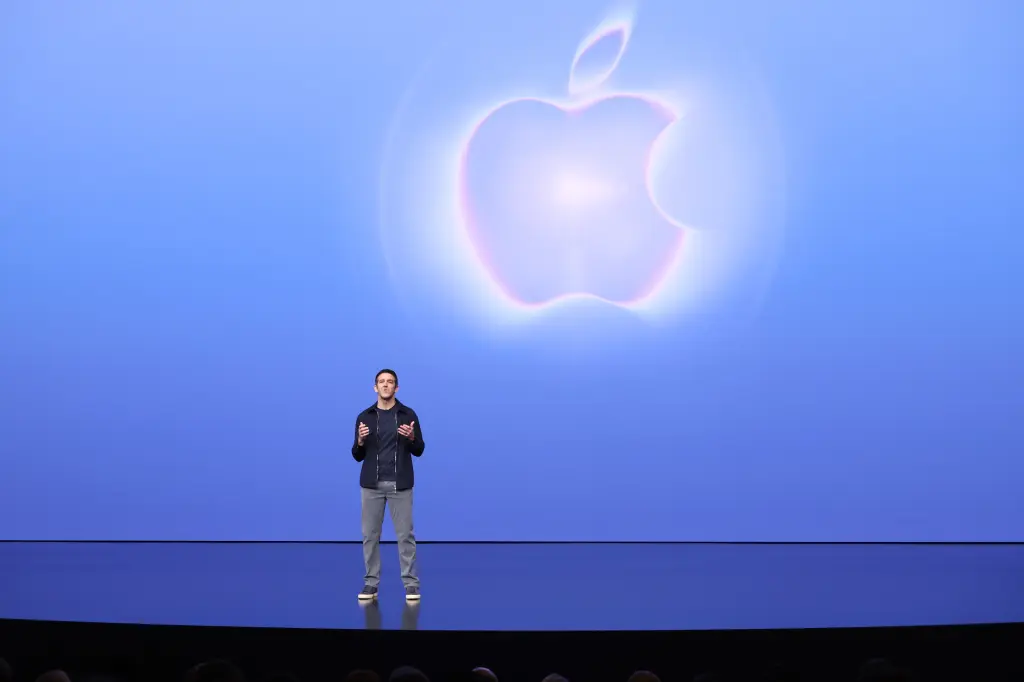
The architect most closely associated with that operational discipline, Tim Cook, formally handed the CEO role to John Ternus on September 1, 2026, closing out a run that started in Steve Jobs’s shadow and ended as its own distinct legacy. Cook built that legacy not in spite of being unlike Jobs, but because of it, trading Jobs’s product-first showmanship for a relentless focus on supply chains, services and global scale that turned Apple into one of the most profitable companies in history.
Ternus now inherits a company whose growth story has shifted from “what device comes next” to “how much more can be squeezed from the services layer built on top of a device base already installed in hundreds of millions of homes.” How he answers that question will determine whether Apple’s profit curve keeps climbing at anything like the pace Cook set.