
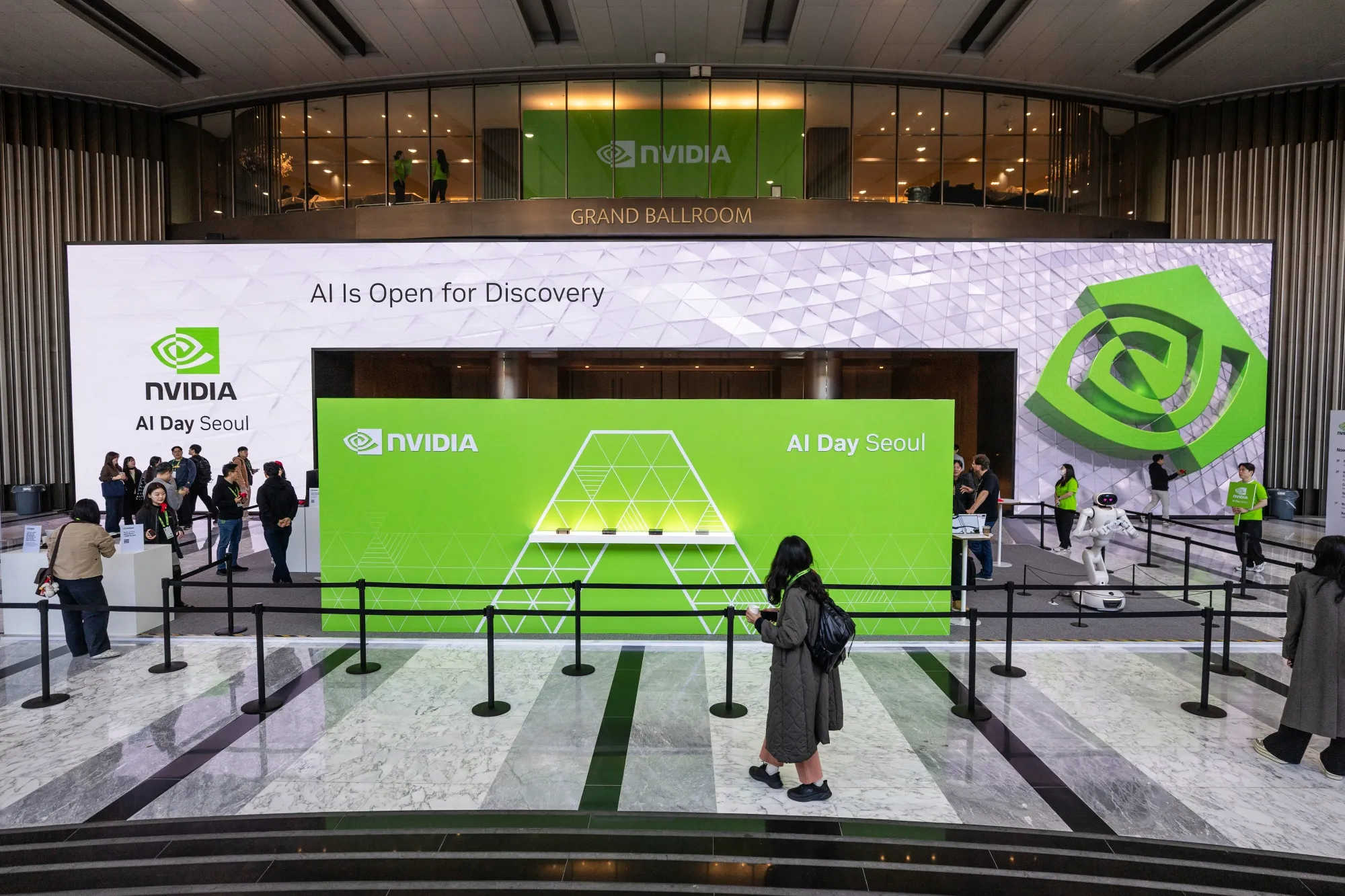

Nvidia’s AI Day in Seoul was supposed to highlight the chipmaker’s deepening ties with South Korea’s most important artificial intelligence companies. Instead, the event became a test of whether the company could keep its business agenda on track while its chief executive faces a personal and corporate crisis.
Madison Huang, a senior director at Nvidia and the daughter of co-founder Jensen Huang, had been scheduled to appear on stage Monday to underscore the company’s partnership with two key South Korean AI players. She abruptly cancelled her trip over the weekend, citing a family matter. A senior South Korean government official also pulled out, and company executives spent the day deflecting uncomfortable questions from journalists.
The scandal upending the agenda
The disruption follows a series of reports linking Jensen Huang to a woman US officials suspected of acting as a Chinese spy. Huang later admitted to an affair, and Nvidia’s board opened an independent investigation into whether he was the target of foreign intelligence efforts.
The episode has created a rare public crisis for a company that has become the world’s most valuable chipmaker and the dominant supplier of the processors powering the generative AI boom. Nvidia has spent years cultivating relationships with governments, cloud providers, and AI labs. Events like the one in Seoul are designed to reinforce those relationships and project stability.
South Korea is a critical market
The stakes are particularly high in South Korea. The country is home to Samsung Electronics and SK Hynix, two of the most important memory chip producers in the world, and to a growing number of AI startups and research labs. Nvidia’s hardware sits at the center of most advanced AI training clusters, but its leadership also depends on the trust of governments that view semiconductor supply chains as matters of national security.
South Korean officials have generally welcomed Nvidia’s presence, seeing the company as a partner in building domestic AI capacity. A no-show by a senior government figure at a flagship Nvidia event signals that the scandal is being taken seriously in Seoul, even if the business relationship continues.
Madison Huang’s withdrawal
Madison Huang’s planned appearance was meaningful beyond her family connection. As a senior director at Nvidia, she has been involved in the company’s efforts to build relationships with international partners. Her withdrawal, attributed to a family matter, removed a central figure from an event that was meant to showcase continuity and personal commitment from Nvidia’s leadership.
The cancellation also drew attention to the intersection of Nvidia's corporate identity and the Huang family. Jensen Huang has long been the public face of the company, and his relatives have played visible roles in its operations. That closeness can reinforce a founder-led culture, but it also means that personal turmoil can quickly become a corporate distraction.
What Nvidia faces now
The board's independent probe will determine whether the affair involved any breach of security or disclosure obligations. Even if the investigation finds no wrongdoing beyond the personal conduct, the reputational damage could linger. Customers, regulators, and investors may ask whether a company of Nvidia's importance has sufficient governance structures around its high-profile leader.
For the moment, Nvidia is trying to contain the fallout. Executives at the Seoul event emphasized the company's products and partnerships rather than addressing the specifics of the probe. That approach is likely to continue while the board review is underway.
Broader implications
The controversy arrives at a sensitive moment for the AI industry. Governments around the world are scrutinizing the concentration of AI chip supply in a single company. Trust is a key currency, and any suggestion that a CEO of Huang's stature could be compromised by foreign intelligence is taken seriously regardless of the outcome.
Nvidia's technical lead in AI chips remains substantial, and no competitor is close to matching its ecosystem. But the Seoul event showed that leadership crises can disrupt even the most carefully planned corporate diplomacy. The company will need to repair its public standing while continuing to deliver the products that made it indispensable.